Owning a lightweight truck camper opens the door to more freedom and flexibility on the road. But after picking up a camper, one question tends to come up quickly:
“How do I insure this thing?”
Truck campers, like the Tune M1 and M1L, are unique. They are not trailers, they are not traditional RVs, and they do not fit neatly into the categories many insurance companies are used to seeing. Understanding how your camper should be insured can help you avoid coverage gaps and ensure you’re protected before heading out on your next adventure.
To get some clarity, we spoke with Tyler Brookfield, Tune’s insurance partner, about the best way to insure a Tune truck camper.
Is a Tune Truck Camper Considered a Trailer?
No.
Unlike a trailer, a Tune truck camper does not have:
- wheels
- an axle
- a hitch
- or a separate VIN/title registration in most states
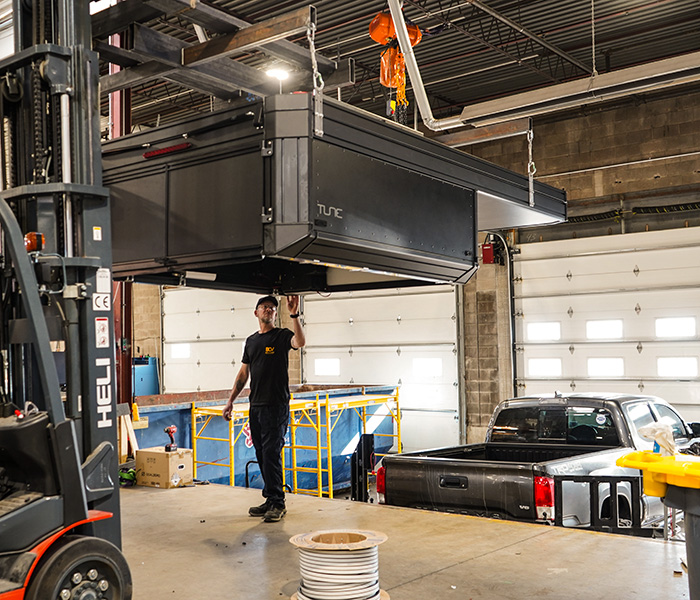
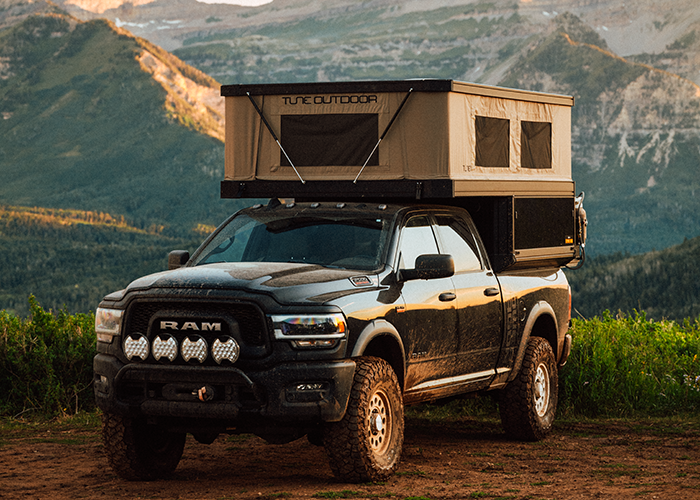
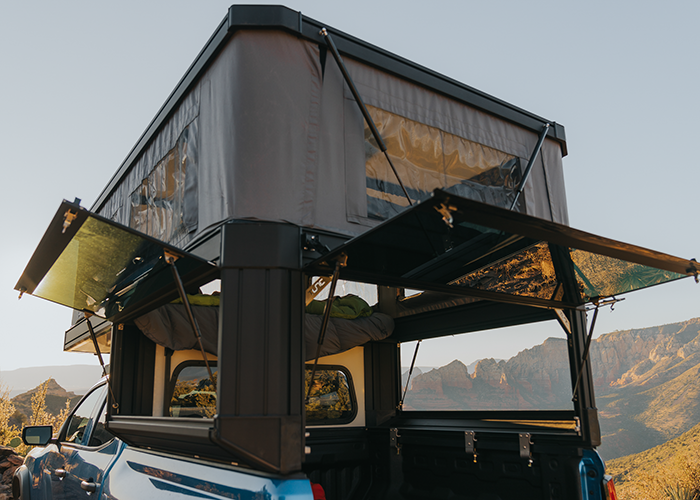
Instead, a Tune camper mounts directly to the truck bed rails and functions as part of the vehicle itself.
“When you’ve got something that hooks up like a trailer, you want physical damage coverage on that piece of equipment, but the liability follows whatever is pulling it,” Tyler explained. “Our situation isn’t like that.”
Because a Tune camper is attached directly to the truck, it is generally not insured the same way as a tow-behind trailer or travel trailer.
How Should You Insure Your Tune?
According to Tyler, the simplest and most cost-effective solution is often to insure the camper as permanently attached equipment on your auto policy.
Many insurance companies allow policyholders to add coverage for aftermarket modifications and permanently attached accessories. Since a Tune camper mounts directly to the truck bed and functions as part of the vehicle, it often fits well within this category.
“When you insure a vehicle, the insurance company uses the VIN to determine exactly what vehicle you have,” Tyler said. “Most insurance companies have an option to add a dollar amount for what they typically call additional attached equipment.”
For example, many off-road enthusiasts insure aftermarket bumpers, suspension systems, roof racks, and other vehicle modifications this way. A Tune camper can often be covered similarly.
What Happens if Your Tune is Damaged?
One of the benefits of insuring your camper as permanently attached equipment is that both the truck and camper can typically be addressed under the same policy. If your truck and camper are damaged in an accident, hailstorm, or another covered event, you would generally work through your auto insurance provider and be subject to your vehicle’s deductible.
“If something happened to it while it was parked outside, if you got in an accident, or it was damaged by hail, it would be subject to your auto deductible,” Tyler explained.
This can simplify the claims process and eliminate the need to manage separate policies for your truck and camper.
What if You Remove Your Tune?
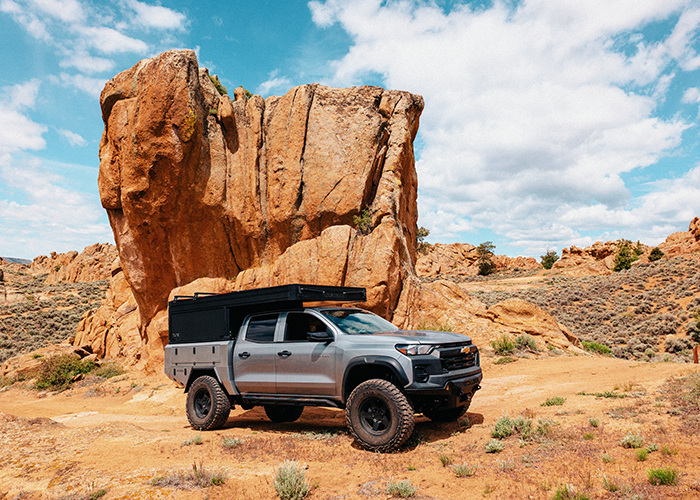
While many Tune owners leave their campers installed for much of the year, some may choose to remove and store them seasonally. If the camper is no longer attached to the vehicle, coverage may change depending on your insurance provider.
“It’s different than a Jeep hardtop that is constantly being removed and reinstalled,” Tyler said. “If it’s off the vehicle and being stored, that’s a conversation worth having with your insurance company.”
In some cases, a detached camper may be covered under a homeowners or renters policy as personal property. However, homeowners' deductibles are often higher than auto deductibles, which is one reason Tyler generally recommends keeping the camper insured as permanently attached equipment whenever possible.
Questions to Ask Your Insurance Company
Before assuming your camper is covered, ask your provider:
- Is my truck camper covered under my existing auto policy?
- Can it be added as permanently attached equipment?
- What documentation do you need?
- Are there coverage limits for aftermarket modifications?
- Is off-road backcountry travel covered?
- What happens if the camper is removed from the vehicle and stored?
Having these conversations before you need to file a claim can help prevent surprises later.
Keep Good Records
No matter how your camper is insured, documentation is important.
“Whenever you have valuable pieces of equipment you’re investing in, it’s always great to have a lot of images and proof of purchase,” Tyler said.
We recommend keeping:
- Photos of your camper
- Purchase receipts and invoices
- Installation documentation
- Records of any upgrades or accessories
These records can make the claims process much smoother if your camper is ever damaged, stolen, or lost in an unexpected event. Taking the time to verify coverage upfront can save major headaches later.
Expenses
According to Tyler, many owners are surprised by how affordable this coverage can be.
“If you add $15,000 of permanently attached equipment to your auto policy, that may only cost a couple of hundred dollars a year,” he said.
Because truck campers are often used seasonally and attached to vehicles that are already insured, adding the camper as permanently attached equipment can be a cost-effective way to protect your investment.
Final Thoughts
A Tune truck camper is not a traditional trailer. Because it mounts directly to the truck and functions as part of the vehicle, many insurance providers can insure it as permanently attached equipment under an auto policy.
The best thing you can do is contact your insurance provider, explain how the camper is mounted, and ask specifically about coverage for permanently attached equipment. A quick conversation today can help ensure your adventures are protected for years to come.
If you have questions about insuring your Tune truck camper, contact Peak 9 Insurance at service@peak9ins.com or call them at (913) 276-0052